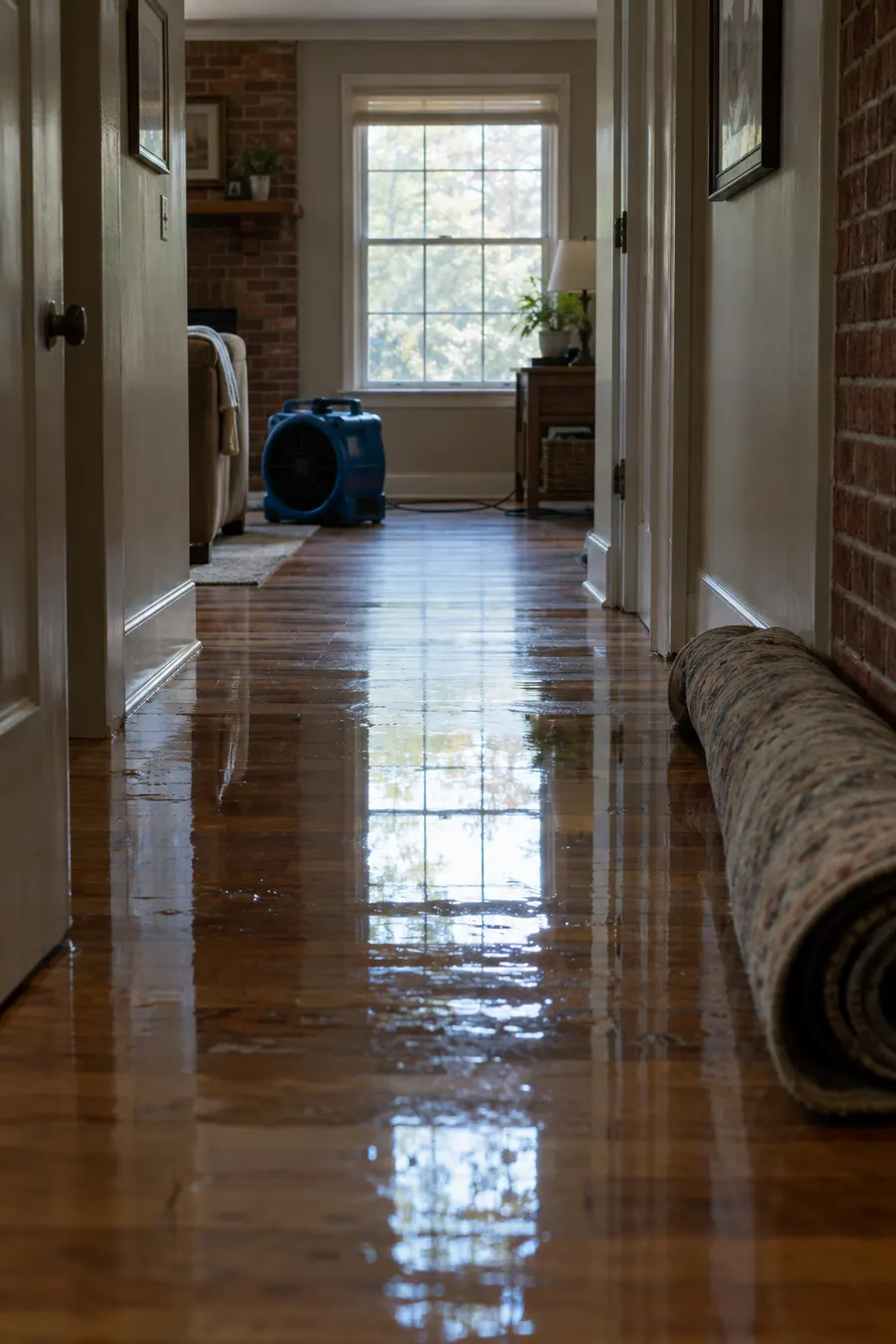
Quick answer
For water damage in Lakemont, GA, shut off your main valve first, or turn off the well pump breaker if you are on a private well. If the leak is at the meter or in the road, call the number on your water bill; Rabun County Water and Sewer Authority's office is 706-960-9835. Then call a water damage restoration company; drying should start within 24 to 48 hours, before mold sets in.
Do this first
After-hours water lines.
- Shut off the water. Close your main valve, or turn off the well pump breaker if you are on a private well. If the leak is at the meter or in the road, call the number on your water bill. Rabun County Water and Sewer Authority customers can call the business office at 706-960-9835.
- Cut power to wet rooms from a dry spot only. If the panel is in a flooded basement, wait.
- Photograph everything before moving furniture or pulling carpet. Insurers ask for it.
- Report the claim and write down the claim number and adjuster name.
- Start drying within 24 to 48 hours. Basements dug into a hillside and crawlspaces stay damp longer than the rest of the house.
Mountain creeks can leave their banks within an hour of a hard rain. Never cross a flooded creek or low-water bridge. Creek and river floodwater can carry sewage and septic runoff, so treat it as contaminated.
What to know about water damage in Lakemont
3rd
The floodgate opened on Mathis Dam at Lake Rabun during Hurricane Helene. Rabun officials ordered an emergency evacuation of people living below the dam after the release flooded a nearby road and trapped people in their communities.
Source: Atlanta Journal-Constitution
14.64 in.
Rain Hurricane Helene dropped on Rabun County in September 2024, the highest total in Georgia from that storm.
Source: Wikipedia
Empty cabins in a freeze
Second homes and rental cabins can sit unheated for days. A pipe that splits in a freeze can run until someone arrives, so check ceilings, floors, and the water heater before turning the water back on.
General guidance
Wells and septic
Homes on a private well lose water when the power goes out, and saturated ground can back up a septic system after days of rain. If floodwater reached the wellhead, have the water tested before drinking it.
General guidance
Check your ZIP
How often does Rabun County get flash flood warnings?
The National Weather Service issued 22 flash flood warnings that included Rabun County from 2016 through November 11, 2026, peaking at 5 in 2022. Each one means flooding is happening or about to happen, which is when basements, crawlspaces, and low slab homes take on water.
Source: our count from the National Weather Service warning archive, Iowa Environmental Mesonet.
| Year | Warnings |
|---|---|
| 2016 | 0 |
| 2017 | 1 |
| 2018 | 3 |
| 2019 | 1 |
| 2020 | 3 |
| 2021 | 4 |
| 2022 | 5 |
| 2023 | 0 |
| 2024 | 4 |
| 2025 | 0 |
| 2026 | 1 |
Water damage in Lakemont: cost, insurance, drying, and safety
How much does water damage restoration cost in Lakemont?
Most water damage restoration jobs cost between $450 and $16,000, with a national average of $3,869, or about $3 to $7.50 per square foot (Angi). Clean water from a supply line costs the least. Creek floodwater, sewage, and septic backups cost the most, and so do leaks that ran for days before anyone noticed. Ask for a written estimate after the inspection, and ask whether the company bills your insurer directly.
Does homeowners insurance cover water damage in Georgia?
Usually, if the water came from a sudden event like a burst pipe or a failed water heater. Lake, creek, and dam-release flooding needs a separate flood policy, and some policies limit freeze coverage for cabins left unheated. Sewer or septic backup often needs a backup endorsement. Georgia law treats failing to send claim forms within 15 calendar days of your request as an unfair claims practice (O.C.G.A. § 33-6-34).
How long does it take to dry out water damage?
Drying should start within 24 to 48 hours to prevent mold (EPA). A clean-water leak with professional dehumidifiers and air movers often takes several days. Crawlspaces, lake-level basements, and log walls take longer. The job is done when moisture readings say so, not when surfaces feel dry.
Is it safe to stay in the house after water damage?
Usually, if the water was clean, the leak is stopped, and power to wet rooms is off. Leave and call 911 if you smell gas, see sparking, or a ceiling is sagging. If creek water, sewage, or septic water covers living areas, keep children and pets away until it has been cleaned up, and never walk through standing water near outlets or appliances.
Who should you call first for water damage in Lakemont?
Call 911 first if anyone is in danger. Then shut off the water. If the leak is on the utility side, call the number on your water bill; Rabun County Water and Sewer Authority's office is 706-960-9835. On a private well, turn off the pump breaker. Next, call a water damage restoration company, a plumber to fix the source, and your insurer. See who to call for water damage.
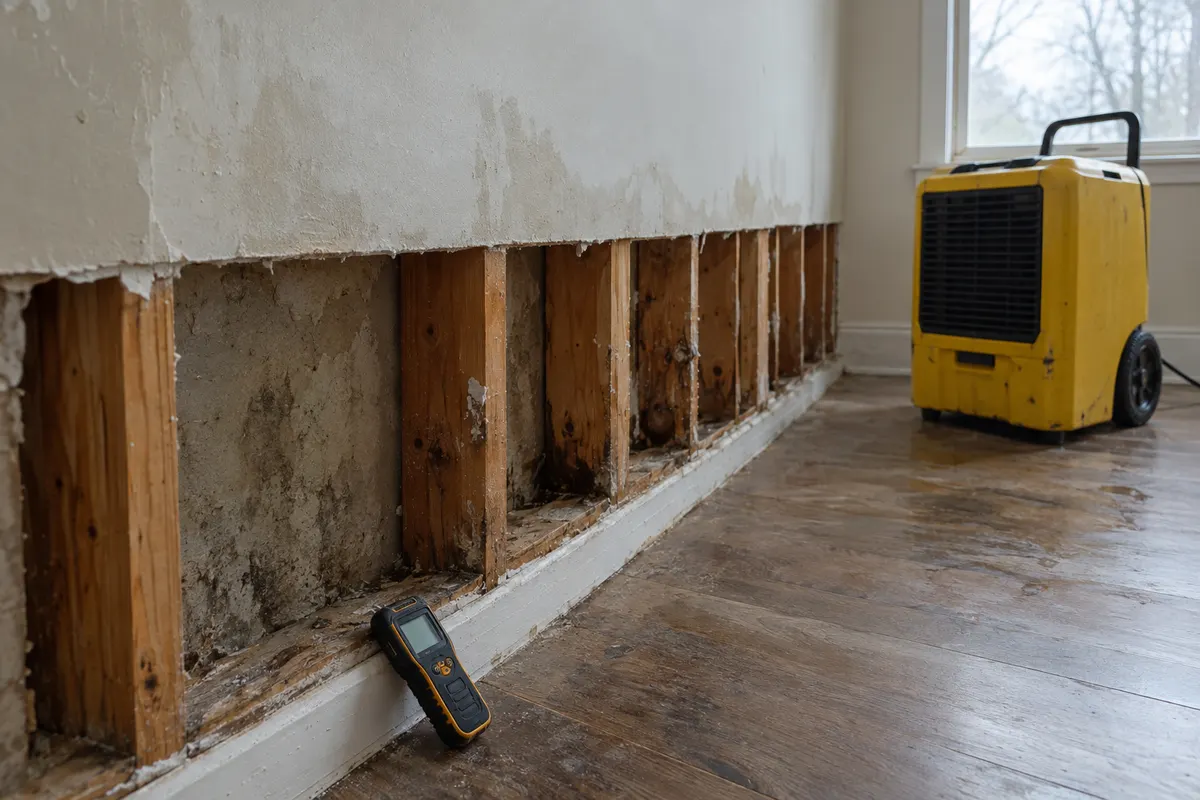
Water removal and restoration in Lakemont
Flood damage cleanup: water that came in when a creek left its banks, a river rose, or hillside runoff got in after heavy rain. All of it is treated as contaminated.
Basement and crawlspace water removal: extraction from basements built into a slope and from crawlspaces, where groundwater keeps seeping in after a storm.
Burst pipe cleanup: frozen pipes in crawlspaces, exterior walls, and homes or cabins left empty during a cold snap or power outage.
Water heater and appliance leaks: tank failures and washer, dishwasher, and ice maker lines.
Water mitigation and structural drying: air movers, dehumidifiers, and daily moisture readings until materials, including log walls and hardwood, are dry.
Sewage and septic backup cleanup: toilet and drain backups, including septic systems that back up after heavy rain.
Ask the company that answers about its inspection process, how it documents moisture readings, and whether it bills your insurer directly.
Lakemont questions
Who answers when I call?
An independent water damage restoration company that serves Lakemont and Rabun County. WaterRemoval247 connects the call; the company you speak with handles the inspection, estimate, and work.
Lakemont is unincorporated. Who handles my water?
If Rabun County Water and Sewer Authority sends your bill, call its business office at 706-960-9835 for leaks at the meter or in the road. If another provider bills you, use the number on that bill. If you have no water bill, you are on a private well, so turn off the pump breaker and call a plumber.
What happened at Lake Rabun during Helene?
Officials opened a third floodgate on Mathis Dam, which flooded a nearby road and trapped people in their communities. Rabun authorities ordered an emergency evacuation of people living below the dam. Rabun County got 14.64 inches of rain from the storm.
My lake cabin sat empty during a freeze. What should I check?
Before turning the water back on, look for wet ceilings, swollen floors, and water under sinks and around the water heater. If you find a leak, keep the water off, photograph it, and call your insurer. Some policies limit freeze coverage for homes left unheated.
Which ZIP codes does this page cover?
ZIP 30552, including Lakemont and the Lake Rabun area. For Tallulah Falls, see the Tallulah Falls page.
Related guides
Other North Georgia mountain towns- What to do in the first hour after water damage
- Georgia insurance claim rules, in plain English
- Does homeowners insurance cover water damage?
- Frozen and burst pipes: what to do
- Water in the basement after heavy rain
- Category 1, 2, and 3 water, explained
- Water in the crawl space
Local phone numbers checked November 2026: